Start the conversation
Same form, every page. Tell us once — we route it to whoever's closest to your tote.
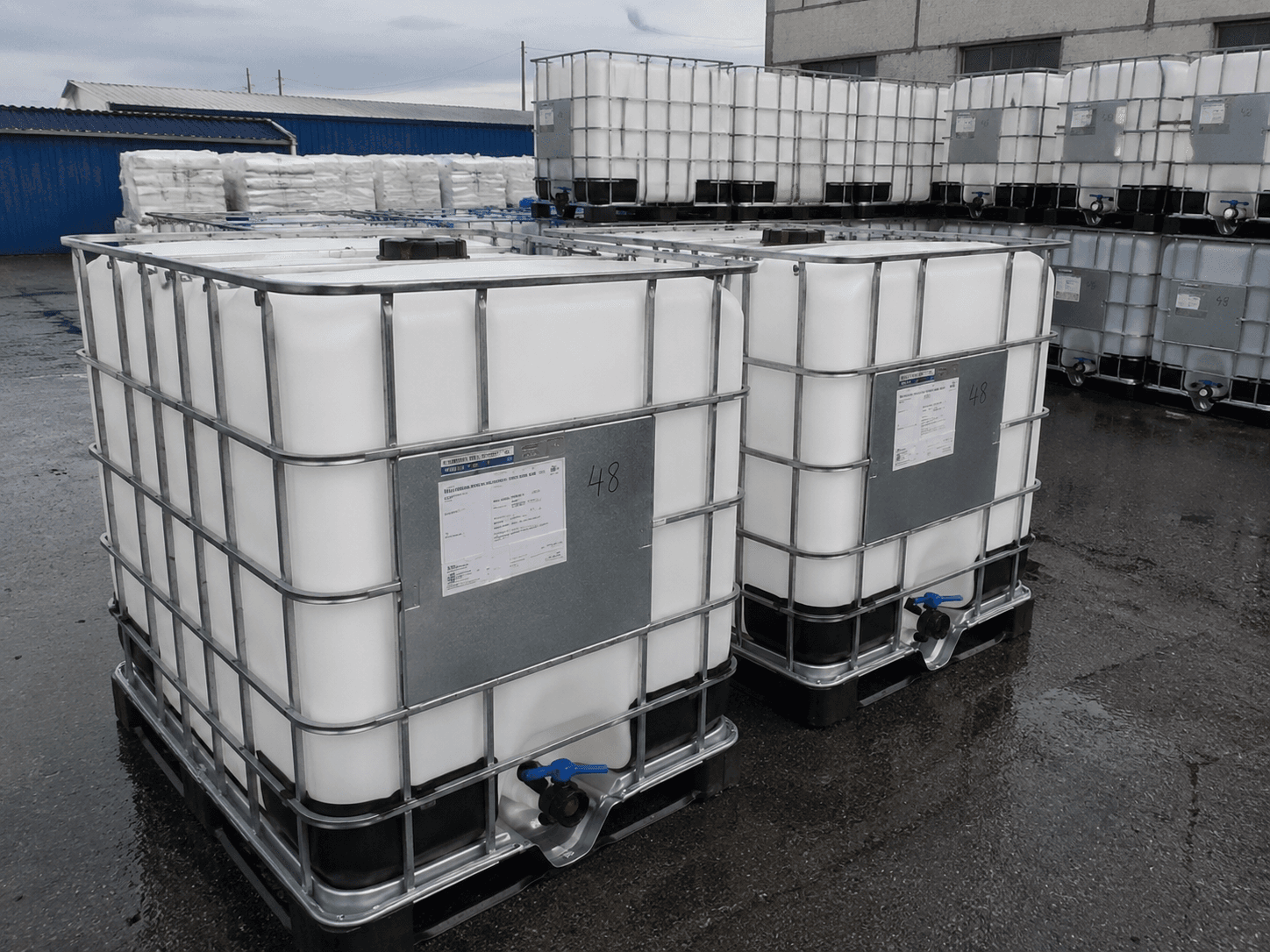
Here's exactly what happens to a tote before it leaves our yard.
Hot rinse
185 °F water at 80 PSI removes prior fill residue. Cage brushed. First quality check.
Caustic wash
NaOH-based wash neutralizes biological and food residues. Dwell time tuned to last fill.
Neutral rinse
Reverse-osmosis rinse to remove all wash chemistry. pH-tested before next stage.
Potable polish
Final low-pressure potable-water rinse. Tank drained, dried, sealed.
Gasket + valve
Gasket replaced with new EPDM or food-grade silicone. Valve verified or swapped.
Chain-of-custody tag
Yard tag affixed: prior fill, wash date, grade assignment, lot number.
Available in two grades, two sizes, three valves.
| SKU | Size | Grade | Valve |
|---|---|---|---|
| RC-275-A-2 | 275 gal | A (food) | 2" cam-lock |
| RC-275-A-S60 | 275 gal | A (food) | S60×6 buttress |
| RC-275-B-2 | 275 gal | B (clean ind.) | 2" ball valve |
| RC-330-A-2 | 330 gal | A (food) | 2" cam-lock |
| RC-330-A-S60 | 330 gal | A (food) | S60×6 buttress |
| RC-330-B-S100 | 330 gal | B (clean ind.) | S100×8 buttress |
Spec it, then send it.
Use the form above with grade, valve, and target ZIP. We'll quote within one business day.
The chemistry behind a tri-stage line.
A reconditioned tote isn't just 'rinsed.' Here's the residue map and what each stage targets.
Hot rinse (stage 1). Removes gross residue — anything water-soluble, anything visible. 185 °F lance at 80 PSI knocks out crystallized sugar, dried salt, paint sludge, beverage solids. About 65% of inbound residue is gone after stage one.
Caustic wash (stage 2). A 3–5% sodium hydroxide solution at 140–160 °F saponifies edible oils, neutralizes protein deposits, dissolves bio-films. This is the stage that separates 'cleaned' from 'food-grade reconditioned.' Dwell time is 20–30 minutes depending on prior fill.
Neutral rinse (stage 3). Reverse-osmosis water at low pressure removes residual NaOH chemistry. We pH-test the final rinse — must read between 6.5 and 7.5. If it doesn't, the tank goes back through stage three.
Potable polish (stage 4). Municipal potable water at 30 PSI for the final pass. Tank is then drained, dried with warm forced air, sealed at the fill cap.
Gasket + valve (stage 5). Gasket pulled and inspected. Replaced with new food-grade EPDM unless seated and inspection-perfect. Valve verified or swapped from our parts shelf.
Tag (stage 6). Chain-of-custody label affixed at the cage with prior fill, wash sequence, gasket replacement, valve type, lot number, tech initials, QR code linking the digital record.
If you only read one section.
- 01Reconditioning is six discrete stages, in order. Each stage has a defined output.
- 02The wash chemistry never goes into the storm drain. We have a 6,000-gallon captured-drain tank and a permitted industrial waste hauler. Most reconditioners can't say the same.
- 03pH-test the rinse. That's the difference between 'looks clean' and 'is clean.'
- 04The chain-of-custody tag is your audit trail. Don't lose it.
- 05Grade A is the right default for any food, beverage, edible oil, or sensitive industrial application. Grade B handles everything else clean.
“The chemistry isn't the hard part. The discipline is. Doing the same six stages the same way 14,000 times a year — that's the work.”
— DeShawn Brooks, wash bay lead